How to Use Short Videos to Grab Attention on Social Media
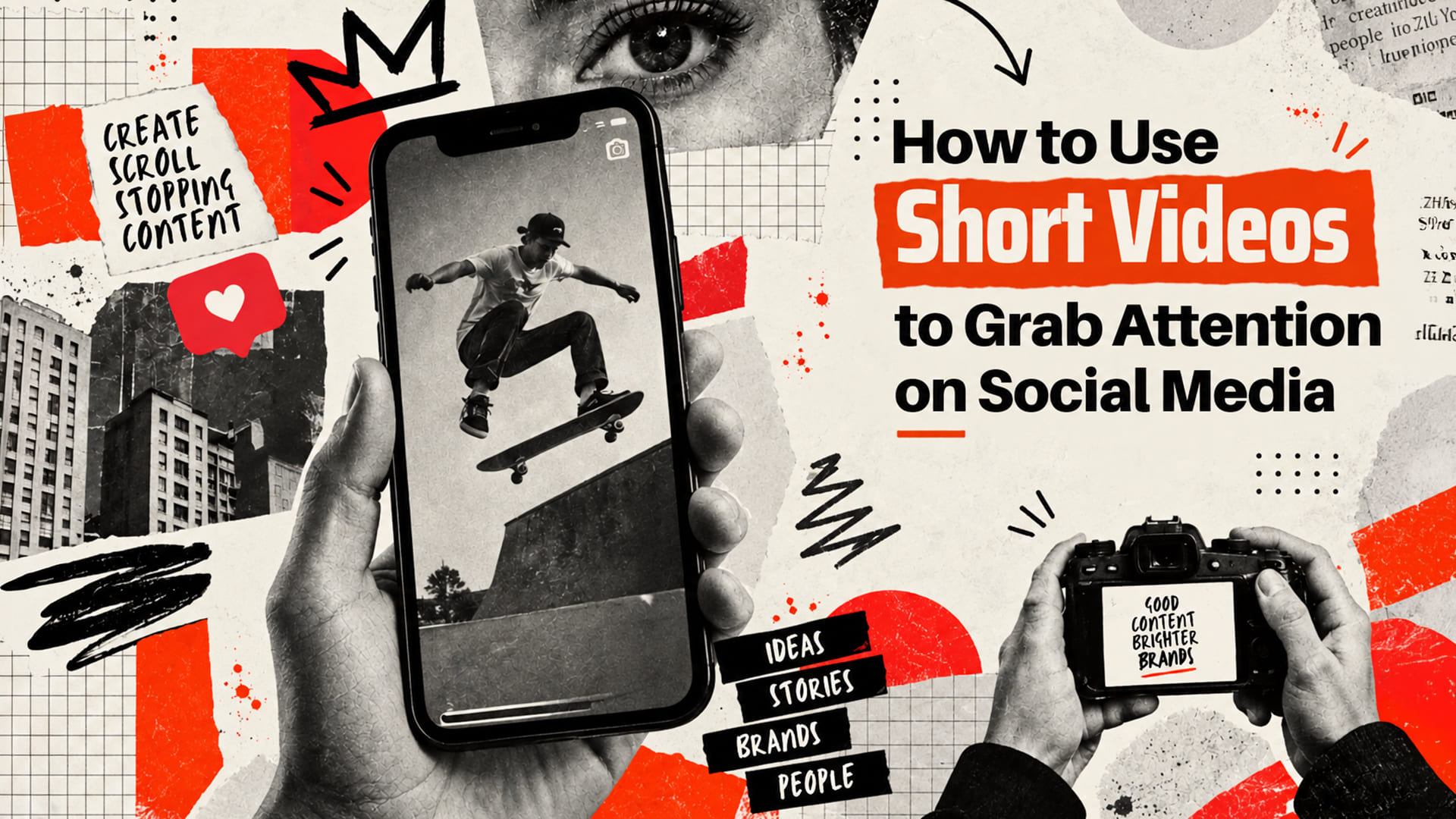
Attention spans are shrinking rapidly across social media. With people constantly scrolling through Instagram, YouTube, Facebook, and other platforms, brands have only a few seconds to make an impression. This has made short videos for social media an increasingly important part of how brands communicate with their audiences.
But why are short videos becoming so effective?
The answer lies in how people consume content today. Social media users don't necessarily want to spend several minutes understanding a brand, product, or idea. They want content that is quick, visually engaging, and easy to understand.
This is where short video marketing comes into play. A well-created short video can communicate an idea, introduce a product, tell a story, or create an emotional connection within seconds. Platforms such as Instagram, YouTube, and Facebook have also made short-form video a central part of their content ecosystems, giving brands more opportunities to reach audiences through engaging visual content.
However, creating a short video is not enough.
The real challenge is creating a video that makes people stop scrolling, keep watching, and remember the brand.
The Science of Attention – Why Short Videos Work
So, why does short-form video work so well on social media?
One of the biggest reasons is the combination of visual information and movement. Our brains can process visual information quickly, and video allows brands to communicate through multiple elements at once, including visuals, sound, text, expressions, transitions, and storytelling.
Unlike static content, short videos can create movement from the very beginning. This gives brands an opportunity to capture attention before the viewer moves on to the next piece of content.
There is also the concept of cognitive load, which refers to the amount of mental effort required to process information. When a message is presented in a simple and easily digestible format, it becomes easier for the audience to understand.
This is why a 20-second product demonstration can sometimes communicate more effectively than a long product description.
Another important factor is the scroll-stopping visual. On social media, the first few seconds can determine whether someone continues watching or simply moves on.
Using strong visuals, curiosity-driven messaging, emotional triggers, and quick storytelling can help brands capture attention and make their content more effective.
Choosing the Right Platform for Your Audience
Understanding why short videos work is only the beginning. Knowing where and how to use them is equally important.
Not every short video will perform in the same way across every platform. Each platform has its own audience behaviour, content style, and expectations.
While cross-platform distribution can help increase visibility, the content should still be adapted according to the platform.
- Instagram – Focus on visually appealing content, Reels, product showcases, behind-the-scenes videos, creator content, and brand storytelling. The content should be easy to consume and encourage viewers to interact or share.
- YouTube Shorts – Focus on educational, informative, and problem-solving content. Quick tutorials, tips, explainers, and industry insights can work particularly well.
- Facebook – Short videos can be used for product content, community-driven stories, entertainment, and promotional campaigns. Content that feels relatable and shareable can help brands reach wider audiences.
- LinkedIn – Use short videos to communicate professional insights, company stories, industry opinions, case studies, and expertise. The tone should match the expectations of a professional audience.
The platform may change, but the basic principle remains the same: understand who is watching and create content that fits their behaviour.
How to Use Short Videos Strategically for Brand Growth
Visual appeal can grab attention, but strategy is what turns attention into results.
Before creating a short video, brands need to identify what they want the content to achieve.
Is the objective to increase brand awareness?
Is it to introduce a new product?
Is the brand trying to generate engagement?
Or is the objective to drive website traffic, enquiries, or sales?
Once the objective is clear, the creative direction becomes much easier to develop.
A simple framework can be used:
Planning
Define the objective, audience, message, platform, and desired action.
Scripting
Develop a strong opening that addresses a problem, creates curiosity, or immediately communicates the value of watching.
Shooting and Editing
Keep the content natural and visually engaging. High production quality can be useful for campaigns, but authentic and relatable content can also perform strongly on social media.
Editing should maintain the pace of the video without making it difficult to follow.
CTA
End the video with a clear next step.
This could be asking the audience to visit a website, comment, share, save, follow the page, or explore a product.
This process forms an important part of creative content marketing, where every piece of content has a clear role within the larger brand strategy.
Tips to Make Short Videos More Engaging
Creating a short video does not automatically make it engaging. The content still needs to provide a reason for people to watch.
Here are some practical ways to improve your short video marketing strategy.
- The First Few Seconds – Start with something that immediately creates interest. A question, unexpected visual, bold statement, or relatable problem can help encourage viewers to continue watching.
- Keep the Message Simple – Avoid trying to communicate too many ideas in one video. Focus on one message and make sure the audience can understand it quickly.
- Use Captions – Many users consume social media content without sound. Adding captions and on-screen text ensures that the message remains clear.
- Vertical-First Format – Short-form videos are primarily consumed on mobile devices. Creating content in a vertical format allows the video to use the available screen space effectively.
- Trending Audio – Relevant trending sounds can help increase discoverability on platforms where audio trends influence content distribution. However, the trend should still make sense for the brand.
- Relatability – Content that reflects common experiences, emotions, problems, or situations can create stronger audience connections.
- Strong Visuals – The opening frame should be visually interesting enough to make someone pause while scrolling.
Going viral should not be the only objective.
The content needs to be relevant to the audience and connected to the brand.
Storytelling – The Secret Behind Memorable Short Videos
Short videos may be brief, but they can still tell a complete story.
Storytelling helps turn information into something that people can understand and remember.
A product video can show a problem and then demonstrate the solution.
A brand video can introduce the people behind the business.
A customer story can demonstrate how a product or service made a difference.
Even a 15-second video can have a beginning, middle, and end if the idea is planned properly.
This is why brand storytelling is becoming increasingly important in short-form content. Instead of simply telling people what a brand offers, businesses can use short videos to show what the brand stands for and how it fits into the audience's everyday life.
The Role of Influencer Marketing in Short-Form Content
Influencer marketing has become closely connected with short-form video because creators already understand how to communicate with their audiences in a natural way.
When a brand creates an advertisement, the audience immediately recognises it as advertising. When a creator demonstrates a product as part of their usual content, the communication can feel more authentic.
However, choosing the right creator is more important than simply choosing someone with a large follower count.
Brands should consider:
- Audience relevance
- Content quality
- Engagement
- Creator personality
- Niche
- Brand alignment
- Previous collaborations
The right creator can bring a brand into conversations that already exist within a particular community.
This makes influencer-led short videos a useful part of a wider creative and social media strategy.
Integrating Short Video Into a Broader Social Media Strategy
Short-form video should not be treated as a standalone marketing activity.
It should work together with the rest of the brand's communication.
For example, a short video can introduce a product, while a carousel can explain its benefits. A blog can provide deeper information, while an advertisement can encourage the audience to take action.
The same campaign idea can also be adapted into different formats.
A longer brand film can be divided into multiple short videos.
A customer testimonial can become a Reel.
A product shoot can generate several pieces of social media content.
An event can produce behind-the-scenes videos, interviews, and short highlights.
This approach allows brands to create a consistent content ecosystem rather than treating every social media post as an individual piece of work.
Creative Tools and Techniques for Engaging Short Videos
Creating short videos has become easier with the availability of smartphones, editing applications, AI tools, and accessible production technology.
Tools such as CapCut, InShot, Canva, and Adobe Premiere can help with editing, captions, transitions, text animations, effects, and other visual elements.
AI can also support the creative process by helping with:
- Content ideas
- Script development
- Storyboarding
- Caption generation
- Editing assistance
- Visual concepts
- Content repurposing
However, technology alone cannot create effective content.
The idea still needs to be relevant.
The story still needs to make sense.
And the execution still needs to represent the brand correctly.
Tools can make production faster, but creativity gives the content its purpose.
Measuring Success – Metrics That Matter
Views and likes can quickly indicate how a video is performing, but they don't tell the full story.
To understand the effectiveness of short video marketing, brands need to look at the metrics that connect with their objectives.
- Watch Time—How long are viewers actually watching the video?
- Completion Rate—How many people are watching until the end?
- Shares—Are viewers finding the content useful or relatable enough to share?
- Saves—Is the content valuable enough for people to return to later?
- Engagement Rate – Are viewers actively interacting with the content?
- CTR – Are people clicking through to the website or landing page?
- Conversions—Is the content contributing to enquiries, leads, purchases, or other business goals?
Analyzing these metrics helps brands understand what is working and what needs to change.
A video with fewer views can sometimes deliver better business results than a viral video with a large but irrelevant audience.
Short Videos Are More Than a Social Media Trend
Short-form video is no longer just another content format. It has become an important part of how brands communicate, build awareness, and stay relevant in a constantly changing digital environment.
But effective short video marketing isn't simply about creating more Reels or following every trending format. It requires a clear understanding of the audience, a strong creative idea, relevant storytelling, platform-specific execution, and a strategy that connects content with wider business objectives.
The strongest short videos don't just capture attention. They communicate something meaningful about the brand.
At LaCreatives, we approach every piece of communication with this bigger picture in mind. As a creative agency, we bring together branding, advertising, digital marketing, social media, content creation, photography, video production, website development, and creative campaigns to help brands build a consistent presence across every relevant touchpoint.
Whether it is a short-form social video, a larger advertising campaign, a brand identity, or a complete digital experience, the objective remains the same: to turn ideas into communication that connects with people and creates impact.
Because getting someone to stop scrolling is only the beginning.
The real goal is to give them a reason to remember your brand.